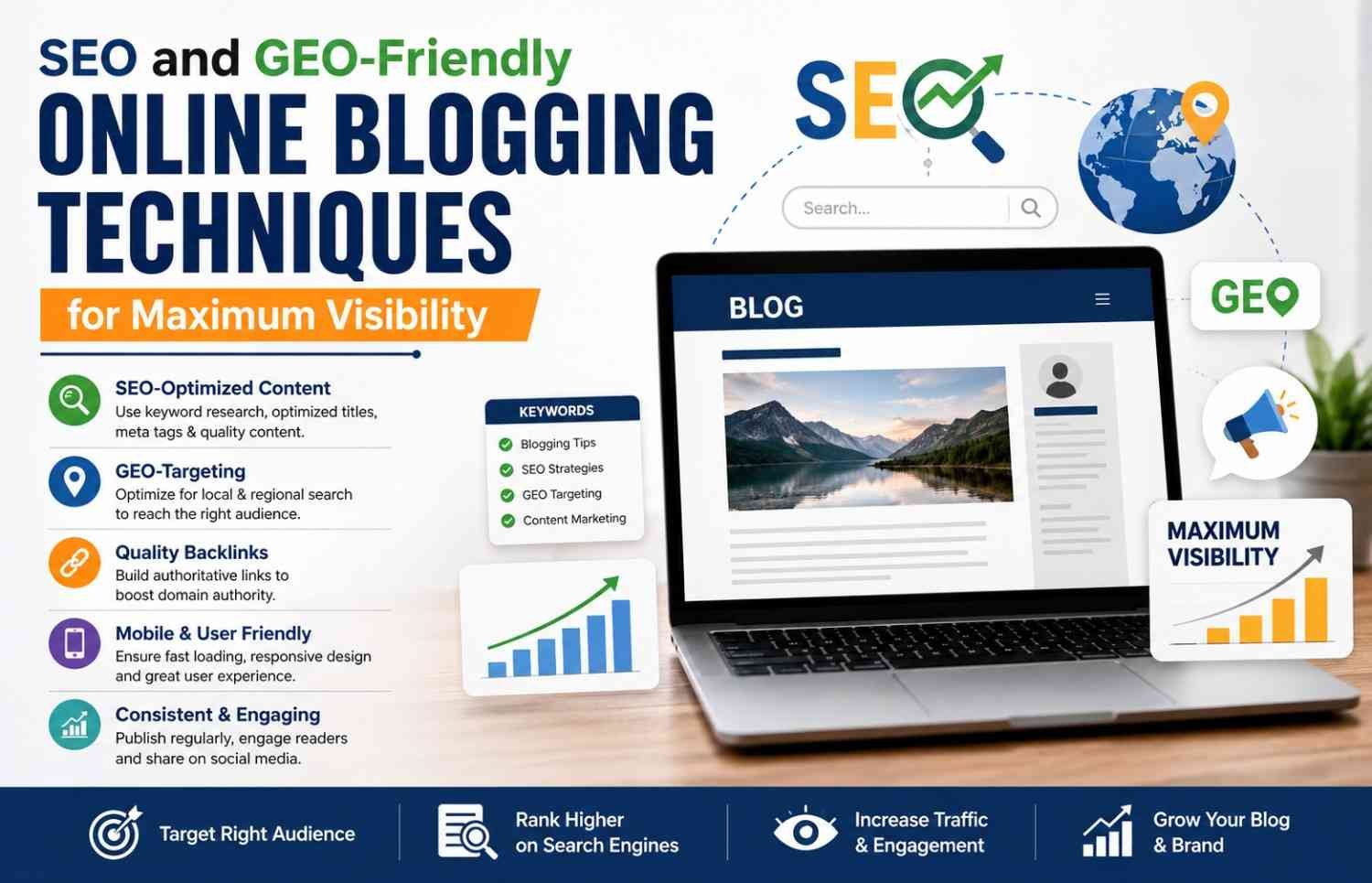
In today’s highly competitive digital landscape, creating a blog is no longer enough. Millions of articles are published every day, making it increasingly difficult for content creators, businesses, and bloggers to stand out. To achieve long-term success, bloggers must adopt both SEO (Search Engine Optimization) and GEO (Generative Engine Optimization) strategies. These techniques help content rank higher in traditional search engines like Google while also improving visibility in AI-powered search and generative platforms.
Whether you are a beginner blogger or an experienced content creator, understanding SEO and GEO-friendly online blogging techniques can significantly increase your website traffic, audience engagement, and online authority. Platforms like fsiBlog and fsiBlog com, which serve as online blogging platforms, provide excellent opportunities for writers to publish high-quality content and reach a wider audience.
What is SEO-Friendly Blogging?
SEO-friendly blogging refers to the practice of optimizing blog content so that search engines can easily understand, index, and rank it. The ultimate goal is to appear on the first page of search results for relevant keywords.
Key components of SEO-friendly blogging include:
- Keyword optimization
- High-quality content creation
- User-friendly website structure
- Mobile responsiveness
- Internal and external linking
- Fast page loading speed
- Meta tag optimization
By implementing these strategies, bloggers can improve their chances of attracting organic traffic from search engines.
Understanding GEO-Friendly Blogging
GEO, or Generative Engine Optimization, is a newer concept designed to optimize content for AI-powered search engines and generative AI systems. As users increasingly rely on AI tools to answer questions and provide recommendations, content creators need to ensure their blogs are structured in a way that AI systems can easily interpret and reference.
GEO-friendly content focuses on:
- Clear and factual information
- Well-structured headings
- Concise answers to user queries
- Authoritative sources
- Question-and-answer formats
- Context-rich explanations
The combination of SEO and GEO helps content remain visible across both traditional search engines and emerging AI search platforms.
Also Read: Ayurvedic Treatment for Asthma and Respiratory Health
Conduct Comprehensive Keyword Research
Effective blogging starts with proper keyword research. Understanding what your audience is searching for allows you to create content that addresses their needs.
Best practices include:
- Target primary keywords with good search volume.
- Use long-tail keywords for specific user intent.
- Include semantic and related keywords naturally.
- Analyze competitor content for keyword opportunities.
Instead of keyword stuffing, focus on naturally incorporating keywords throughout the content while maintaining readability.
Create High-Quality and Valuable Content
Search engines and AI systems prioritize content that provides genuine value to readers. High-quality content helps establish trust and encourages users to spend more time on your website.
To create valuable blog content:
- Solve real problems.
- Answer common questions.
- Provide actionable tips.
- Use data, examples, and case studies.
- Update content regularly.
Remember that quality always outweighs quantity. A well-researched 1,000-word article often performs better than a poorly written 3,000-word post.
Optimize Headlines and Subheadings
Your blog title is often the first thing readers notice. An engaging headline can significantly improve click-through rates.
Effective headline practices include:
- Using target keywords naturally
- Keeping titles clear and descriptive
- Including numbers where relevant
- Creating curiosity without being misleading
Subheadings help organize content and improve readability. They also allow search engines and AI systems to understand the structure and context of your article.
Focus on User Intent
Understanding user intent is one of the most important aspects of modern SEO and GEO optimization.
There are four main types of search intent:
- Informational
- Navigational
- Transactional
- Commercial Investigation
Before writing a blog post, determine why users are searching for a specific topic. Then create content that directly satisfies that intent.
For example, if someone searches for “SEO-friendly blogging tips,” they likely want practical advice rather than a generic definition of SEO.
Improve Content Readability
Readable content performs better because users can quickly find the information they need.
Tips for improving readability:
- Use short paragraphs.
- Write simple sentences.
- Include bullet points and lists.
- Use descriptive headings.
- Highlight important information.
AI-powered systems also prefer well-structured content because it is easier to analyze and summarize.
Use Internal and External Links
Link building remains an essential SEO practice.
Internal Links
Internal links connect different pages within your website. Benefits include:
- Improved website navigation
- Better user experience
- Increased page authority distribution
- Enhanced indexing by search engines
External Links
Linking to reputable sources helps establish credibility and trustworthiness. Always use authoritative and relevant sources when referencing statistics or industry information.
Optimize Images and Multimedia
Visual content enhances user engagement and improves overall blog performance.
Image optimization techniques include:
- Using descriptive file names
- Adding keyword-rich alt text
- Compressing images for faster loading
- Choosing modern image formats
Videos, infographics, and charts can also increase time-on-page, which may positively impact rankings.
Create FAQ Sections for GEO Optimization
FAQ sections are particularly effective for both SEO and GEO strategies. They directly answer user questions and increase the chances of appearing in featured snippets and AI-generated responses.
Example:
What is SEO-friendly blogging?
SEO-friendly blogging involves optimizing content, structure, and user experience to improve visibility in search engine results.
Why is GEO important?
GEO helps content become more accessible and discoverable in AI-powered search environments and generative search experiences.
Enhance Website Performance
Website performance directly affects rankings and user satisfaction.
Focus on:
- Fast loading speeds
- Mobile responsiveness
- Secure HTTPS connections
- Clean website architecture
- Minimal intrusive advertisements
Google and AI systems both prioritize websites that deliver a positive user experience.
Build Authority and Trust
E-E-A-T (Experience, Expertise, Authoritativeness, and Trustworthiness) has become increasingly important in content marketing.
To build authority:
- Publish original insights
- Cite credible sources
- Showcase expertise
- Maintain content accuracy
- Encourage genuine user engagement
Trustworthy content is more likely to be referenced by both search engines and AI-driven systems.
Conclusion
The future of online blogging lies in combining traditional SEO practices with modern GEO strategies. Search engines and AI-powered platforms are evolving rapidly, and bloggers who adapt to these changes will gain a significant competitive advantage.
By conducting keyword research, creating high-quality content, optimizing readability, improving website performance, and focusing on user intent, bloggers can maximize visibility across multiple digital channels. Whether you publish on your own website or use online blogging platforms such as fsiBlog and fsiBlog com, implementing SEO and GEO-friendly blogging techniques will help attract more readers, increase engagement, and establish long-term online authority.
As the digital world continues to evolve, bloggers who prioritize both human readers and intelligent search systems will be best positioned for sustainable growth and success.
About the Author