
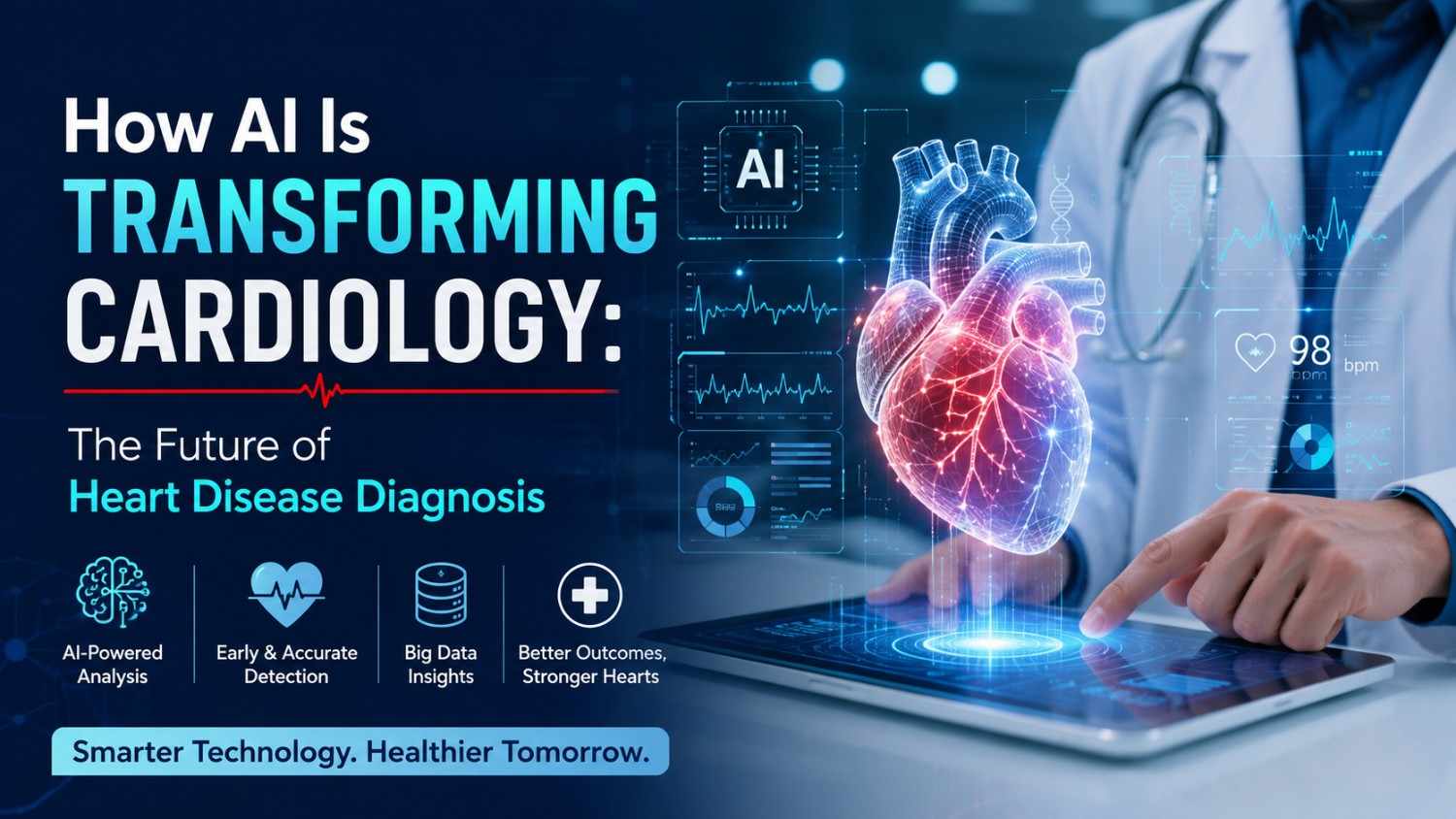
Heart disease continues to be one of the leading causes of death worldwide. Despite remarkable advancements in medical science, early diagnosis remains one of the biggest challenges in preventing serious cardiac complications. Fortunately, Artificial Intelligence (AI) is changing this landscape by helping cardiologists detect heart diseases faster, more accurately, and often before symptoms become severe.
From interpreting ECG reports in seconds to identifying hidden patterns in cardiac imaging, AI is revolutionizing modern cardiology. While AI cannot replace experienced physicians, it serves as a powerful clinical assistant that enhances diagnostic precision and improves patient outcomes.
In this article, we’ll explore how AI is transforming cardiology and why it represents the future of heart disease diagnosis.
Understanding AI in Cardiology
Artificial Intelligence refers to computer systems capable of performing tasks that normally require human intelligence. In cardiology, AI analyzes enormous volumes of medical data, including:
- ECG reports
- Echocardiograms
- Cardiac CT scans
- MRI images
- Blood test reports
- Electronic Health Records (EHR)
- Wearable device data
By identifying patterns that may not be visible to the human eye, AI helps physicians make informed and faster clinical decisions.
Why Early Diagnosis Matters
Many cardiovascular diseases develop silently over several years. Conditions such as coronary artery disease, heart failure, arrhythmias, and valve disorders may not produce noticeable symptoms during their early stages.
Delayed diagnosis often results in:
- Heart attacks
- Stroke
- Permanent heart damage
- Emergency hospitalization
- Increased healthcare costs
AI-powered diagnostic systems help identify these risks earlier, allowing patients to receive timely treatment and adopt preventive lifestyle changes.
How AI Is Revolutionizing Heart Disease Diagnosis
1. Faster ECG Interpretation
Electrocardiograms (ECGs) are among the most commonly performed cardiac tests. Traditionally, ECG interpretation depends heavily on physician expertise.
Modern AI algorithms can analyze ECG recordings within seconds by detecting:
- Arrhythmias
- Atrial fibrillation
- Heart blocks
- Silent heart attacks
- Electrical abnormalities
This significantly reduces reporting time while supporting cardiologists with highly accurate interpretations.
Also Read: The Future of Online Blogging: AI Trends Every Content Creator Should Know
2. Advanced Cardiac Imaging Analysis
AI is dramatically improving the interpretation of:
- Echocardiography
- CT Coronary Angiography
- Cardiac MRI
- Nuclear Cardiology Imaging
AI-assisted imaging can automatically detect:
- Narrowed coronary arteries
- Weak heart muscles
- Valve abnormalities
- Congenital heart defects
- Early heart failure signs
This enables more consistent diagnoses and reduces the likelihood of human error.
3. Predicting Heart Disease Before Symptoms Appear
One of AI’s greatest strengths is predictive analytics.
Instead of simply identifying existing disease, AI estimates future cardiovascular risk by analyzing:
- Blood pressure
- Cholesterol
- Diabetes status
- Smoking history
- Family history
- Lifestyle habits
- Age and gender
Healthcare providers can then recommend preventive interventions before a major cardiac event occurs.
4. Personalized Treatment Planning
Every patient has unique medical needs.
AI helps cardiologists design personalized treatment plans based on:
- Medical history
- Imaging results
- Laboratory reports
- Medication response
- Lifestyle factors
This supports precision medicine, where treatments are tailored specifically to individual patients rather than using a one-size-fits-all approach.
5. AI-Powered Wearable Devices
Wearable technology has become increasingly sophisticated.
Devices like smartwatches and fitness trackers continuously monitor:
- Heart rate
- ECG
- Blood oxygen
- Physical activity
- Sleep patterns
AI analyzes this real-time data and alerts users when abnormalities are detected.
This continuous monitoring allows doctors to identify irregular heart rhythms before they become life-threatening.
6. Supporting Emergency Cardiac Care
During emergencies, every minute counts.
AI helps emergency departments by:
- Prioritizing critical patients
- Detecting acute heart attacks quickly
- Identifying stroke risk
- Accelerating treatment decisions
This reduces delays and improves survival rates.
Benefits of AI in Cardiology
The growing adoption of AI provides numerous advantages:
Improved Diagnostic Accuracy
AI reduces diagnostic variability and supports evidence-based decision-making.
Early Disease Detection
Hidden cardiovascular risks can be identified much earlier than conventional methods.
Faster Clinical Decisions
Automated analysis saves valuable time for healthcare professionals.
Better Patient Outcomes
Earlier diagnosis often leads to more successful treatment and fewer complications.
Reduced Healthcare Costs
Preventing severe cardiac events can significantly lower hospitalization expenses.
Can AI Replace Cardiologists?
The simple answer is No.
AI is designed to assist—not replace—cardiologists.
Human physicians provide:
- Clinical judgment
- Physical examination
- Patient counseling
- Treatment planning
- Emergency decision-making
- Emotional support
AI serves as an intelligent assistant, enabling cardiologists to make more informed decisions using advanced data analysis.
Patients should always consult qualified heart specialists for diagnosis and treatment.
AI and Preventive Cardiology
Preventive cardiology is becoming increasingly data-driven.
AI helps identify patients who may benefit from:
- Lifestyle modifications
- Blood pressure management
- Cholesterol control
- Diabetes management
- Weight reduction
- Smoking cessation
By recognizing risk factors early, AI contributes to healthier lifestyles and reduced cardiovascular disease burden.
The Future of AI in Heart Care
The future of cardiology looks incredibly promising.
Emerging innovations include:
- AI-assisted robotic heart procedures
- Digital twin heart simulations
- Remote patient monitoring
- Virtual cardiac consultations
- AI-guided medication optimization
- Continuous home-based cardiac surveillance
As technology evolves, healthcare providers will be able to deliver more personalized, efficient, and preventive cardiac care.
For patients seeking expert cardiovascular evaluation, consulting the best cardiologist in Gorakhpur alongside access to advanced AI-enabled diagnostic technologies can make a significant difference in early detection and treatment. Choosing a modern heart hospital in Gorakhpur equipped with state-of-the-art imaging systems, digital diagnostics, and experienced cardiac specialists ensures comprehensive heart care backed by both medical expertise and innovative technology.
Conclusion
Artificial Intelligence is reshaping the future of cardiology by making heart disease diagnosis faster, more accurate, and increasingly predictive. From AI-powered ECG interpretation to advanced imaging analysis and personalized treatment planning, technology is helping physicians detect cardiovascular diseases earlier than ever before.
However, AI is most effective when combined with the expertise of skilled cardiologists. The future of heart care lies in this collaboration between intelligent technology and compassionate medical professionals, leading to better patient outcomes, reduced healthcare costs, and healthier lives.
As AI continues to evolve, it will play an even greater role in preventing heart disease rather than simply treating it—ushering in a new era of proactive, precision-based cardiovascular care.
Frequently Asked Questions (FAQs)
1. What is AI in cardiology?
AI in cardiology uses machine learning and advanced algorithms to analyze medical data, helping doctors diagnose and manage heart diseases more efficiently.
2. Can AI detect heart disease early?
Yes. AI can identify subtle patterns in ECGs, imaging, and health records that may indicate early signs of cardiovascular disease before symptoms become noticeable.
3. Does AI replace cardiologists?
No. AI supports cardiologists by improving diagnostic accuracy, but treatment decisions and patient care still rely on experienced medical professionals.
4. How do wearable devices use AI for heart health?
AI analyzes data from smartwatches and fitness trackers to detect irregular heart rhythms, monitor heart rate trends, and alert users to potential cardiac issues.
5. Is AI the future of heart disease diagnosis?
Yes. AI is expected to become an integral part of cardiovascular care by enabling earlier detection, personalized treatment, and continuous patient monitoring while complementing the expertise of healthcare providers.
About the Author