
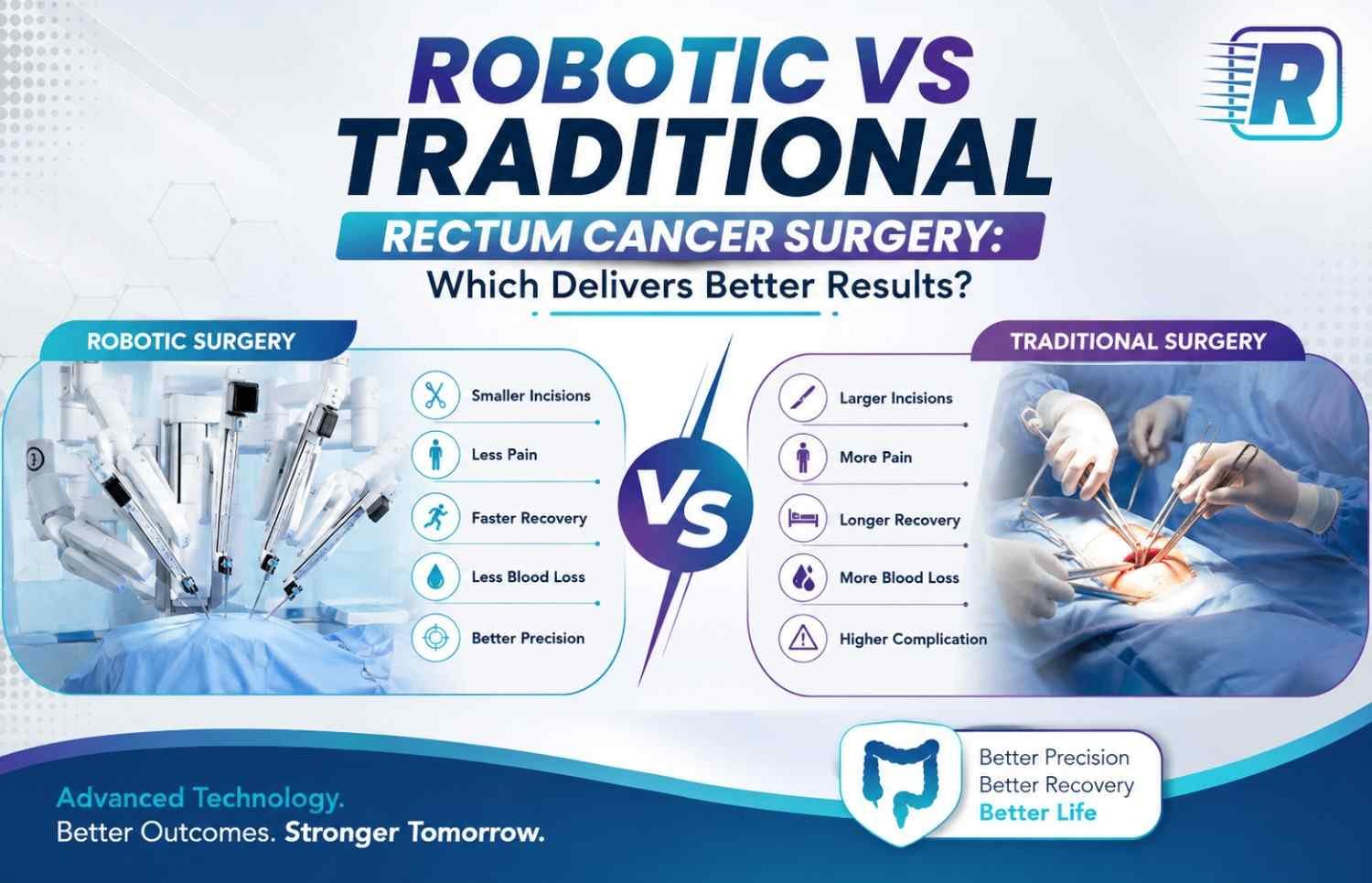
Rectum cancer is one of the most common gastrointestinal cancers affecting thousands of people every year. Advances in medical technology have significantly improved treatment outcomes, especially in surgical oncology. Today, patients diagnosed with rectal cancer often have two major surgical options: traditional open surgery and robotic-assisted surgery.
But which approach delivers better results? Is robotic surgery truly superior, or does traditional surgery still hold its place in modern cancer treatment?
In this article, we will compare robotic and traditional rectum cancer surgery, discussing their benefits, limitations, recovery time, and outcomes to help patients make informed decisions.
Understanding Rectum Cancer Surgery
The rectum is the final part of the large intestine located just before the anus. When cancer develops in this area, surgery is often the most effective treatment, especially in early and intermediate stages.
The primary goal of rectum cancer surgery is to:
- Remove the cancerous tumor completely
- Preserve normal bowel function whenever possible
- Minimize complications
- Prevent cancer recurrence
The type of surgery recommended depends on factors such as:
- Tumor size and location
- Cancer stage
- Patient’s overall health
- Previous treatments such as chemotherapy or radiation
A skilled rectum cancer surgeon in Lucknow can determine the most suitable surgical approach after a detailed evaluation.
What Is Traditional Rectum Cancer Surgery?
Traditional or open rectum cancer surgery involves making a large incision in the abdomen to access and remove the tumor.
This method has been used successfully for decades and remains a standard treatment option in many hospitals.
Advantages of Traditional Surgery
- Direct visualization of organs and tissues
- Effective for large or complex tumors
- Widely available
- Suitable for patients with specific anatomical challenges
Limitations of Traditional Surgery
- Larger surgical incision
- More postoperative pain
- Increased blood loss
- Longer hospital stay
- Longer recovery period
- Higher risk of wound-related complications
While traditional surgery remains effective, many patients today are exploring minimally invasive alternatives.
Also Read: How a Lace Manufacturer in Kolkata Supports India’s Textile Industry
What Is Robotic Rectum Cancer Surgery?
Robotic surgery is an advanced minimally invasive technique that uses robotic arms controlled by a highly trained surgeon.
The surgeon operates from a console while viewing a high-definition 3D image of the surgical area. The robotic system translates hand movements into highly precise movements of miniature instruments.
Unlike what some people believe, robots do not perform surgery independently. Every movement is controlled by the surgeon.
A qualified rectum cancer surgeon in Lucknow with robotic surgery expertise can use this technology to perform complex cancer procedures with greater precision.
Key Differences Between Robotic and Traditional Surgery
| Feature | Robotic Surgery | Traditional Surgery |
|---|---|---|
| Incision Size | Small keyhole incisions | Large abdominal incision |
| Blood Loss | Minimal | Higher |
| Pain After Surgery | Less | More |
| Hospital Stay | Shorter | Longer |
| Recovery Time | Faster | Slower |
| Surgical Precision | Very high | Good |
| Scarring | Minimal | More visible |
| Infection Risk | Lower | Higher |
| Return to Daily Activities | Earlier | Delayed |
Benefits of Robotic Rectum Cancer Surgery
1. Greater Surgical Precision
The rectum is located deep within the pelvis, surrounded by delicate nerves and blood vessels.
Robotic technology offers enhanced visualization and precision, helping surgeons remove tumors accurately while protecting surrounding structures.
This is particularly important for preserving:
- Urinary function
- Sexual function
- Normal bowel control
2. Smaller Incisions
Robotic surgery requires only a few tiny incisions.
Benefits include:
- Less tissue trauma
- Reduced postoperative discomfort
- Better cosmetic outcomes
- Lower risk of wound infection
3. Reduced Blood Loss
One of the most significant advantages of robotic surgery is improved control during dissection.
Studies have shown that robotic procedures often result in:
- Less bleeding
- Reduced need for blood transfusions
- Lower surgical stress on the body
4. Faster Recovery
Most patients undergoing robotic surgery experience:
- Shorter hospitalization
- Faster mobility
- Earlier return to work
- Quicker return to normal daily activities
This can significantly improve overall quality of life after treatment.
5. Better Visualization
The robotic system provides surgeons with a magnified 3D high-definition view.
This enhanced visibility is particularly valuable when operating in narrow pelvic spaces where rectal tumors are commonly located.
Benefits of Traditional Rectum Cancer Surgery
Although robotic surgery offers many advantages, traditional surgery still has an important role.
Suitable for Complex Cases
Some advanced cancers may involve:
- Multiple organs
- Extensive scar tissue
- Large tumors
In these situations, open surgery may provide easier access for complete tumor removal.
Proven Long-Term Results
Traditional surgery has decades of evidence supporting its effectiveness.
Many patients continue to achieve excellent cancer control and survival outcomes with open surgical procedures.
Which Surgery Provides Better Cancer Outcomes?
One of the most important questions patients ask is whether robotic surgery improves cancer survival.
Current research suggests that:
- Both robotic and traditional surgery can achieve excellent cancer removal when performed by experienced surgeons.
- Robotic surgery often provides better short-term recovery outcomes.
- Long-term survival rates are generally comparable when the tumor is completely removed.
The most critical factor is not simply the technology but the expertise of the surgeon performing the procedure.
Choosing an experienced rectum cancer surgeon in Lucknow can significantly influence treatment success regardless of the surgical method used.
Who Is a Good Candidate for Robotic Surgery?
Robotic rectum cancer surgery may be ideal for patients who:
- Have early or intermediate-stage rectal cancer
- Prefer minimally invasive treatment
- Want faster recovery
- Have no major contraindications to laparoscopic procedures
However, every case is unique. A detailed consultation with a cancer specialist is necessary before making a decision.
The Importance of Choosing the Right Cancer Surgeon
Whether you choose robotic or traditional surgery, the surgeon’s experience remains one of the most important factors affecting outcomes.
An experienced surgical oncologist can:
- Accurately stage the disease
- Recommend the most suitable treatment plan
- Minimize complications
- Improve long-term survival chances
Patients seeking specialized gastrointestinal cancer treatment often consult both a rectum cancer surgeon in Lucknow and an esophagus cancer surgeon in Lucknow when dealing with complex digestive tract cancers requiring advanced surgical expertise.
Final Verdict: Robotic vs Traditional Rectum Cancer Surgery
Robotic rectum cancer surgery represents a major advancement in cancer care. It offers several benefits, including smaller incisions, less pain, reduced blood loss, faster recovery, and enhanced surgical precision.
However, traditional surgery remains a highly effective option, particularly for complex or advanced cases. Both techniques can provide excellent cancer control when performed by skilled specialists.
The best choice depends on multiple factors, including the stage of cancer, patient health, tumor characteristics, and surgeon expertise.
If you or a loved one has been diagnosed with rectal cancer, consult an experienced rectum cancer surgeon in Lucknow to discuss available treatment options. A personalized approach can help ensure the safest procedure and the best possible outcome.
Conclusion
The debate between robotic and traditional rectum cancer surgery is not about which method is universally better—it is about which method is best for an individual patient. Robotic surgery offers impressive advantages in precision and recovery, while traditional surgery continues to be a trusted and effective treatment option.
The key to successful treatment lies in early diagnosis, expert surgical care, and a comprehensive cancer management plan guided by an experienced specialist. By making informed decisions and seeking treatment from qualified experts, patients can achieve better outcomes and a healthier future.
About the Author